Facility Facts
Understanding the grant application, the county-recorded restrictions, and the practical concerns raised by neighbors and city officials about the TGI facility at 1660 Third Street, Lincoln, CA.
A low-barrier homeless facility typically has minimal entry requirements: often no proof of residence, no ID or background checks, and allowing individuals with criminal records. These facilities usually do not require sobriety and may serve individuals with untreated mental health or substance use issues.
Flexible, often 24/7 access can increase foot traffic at all hours, while fewer upfront behavioral requirements raise concerns about conduct before intervention. Allowing pets and personal belongings may add to worries about cleanliness and loitering. Because these facilities are more accessible, they may draw a larger, higher-need population, raising concerns about increased concentration and impacts on the surrounding area.
When a facility serves a population where a significant percentage of residents are experiencing serious mental illness (57%) or substance use disorder (43%), it is reasonable for nearby residents to have concerns. These conditions can, at times, involve crisis episodes, impaired judgment, or unpredictable behavior — particularly if individuals are not required to be stabilized before entry.
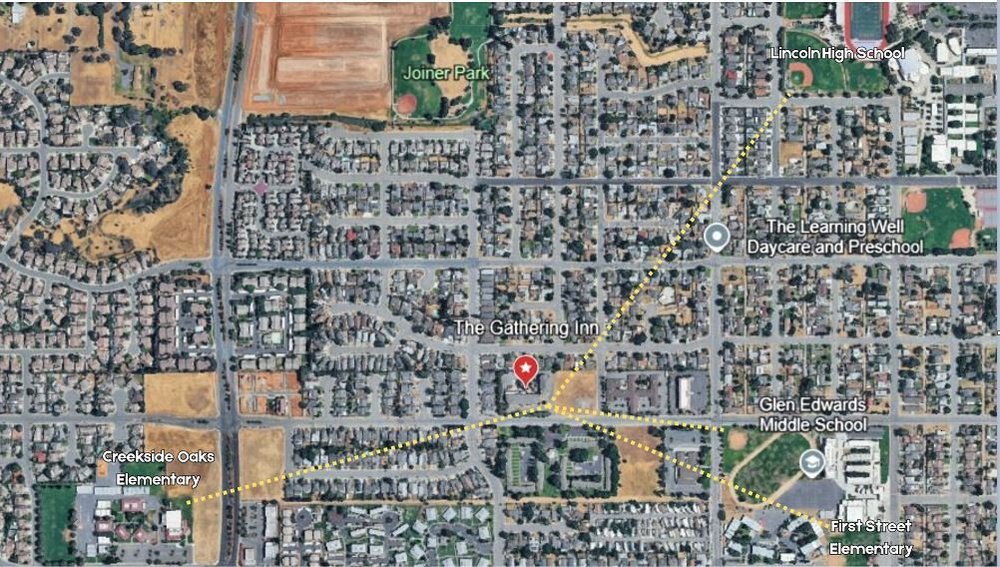
When combined with a model that allows residents to come and go freely, it can lead to increased foot traffic and activity around the site throughout the day, including during school hours. Given the facility's location a block from a middle school, it is valid for parents and neighbors to be concerned about student safety, exposure to disruptive or concerning behavior, and whether appropriate boundaries and supervision can be consistently maintained.
Many residents also feel that public safety was not adequately considered in selecting this location, especially given the proximity to children and the nature of the population being served. These concerns are not about stigma — they reflect practical questions about proximity, population needs, and operational structure.
The operator has described the facility as a "medical respite center," but that characterization conflicts with the county-recorded document governing the property. While the label may sound reassuring, a closer reading of the actual agreement shows it offers little real protection for the community.
- The document does not guarantee that only medical respite patients will live there
- It explicitly allows the operator to house non-qualified residents if the intended population isn't available
- The restrictions contain limited enforcement mechanisms
- Community members raised concerns about the legal weight of these restrictions in practice
Documents show concerns were raised about the potential impact on Lincoln's emergency services and the city's general fund. Call volume data and analysis were gathered and shared among residents and officials.
The facility at 1660 Third Street is located within one block of a middle school and is surrounded by residential neighborhoods. The map below shows the proximity of schools and homes to the facility site.